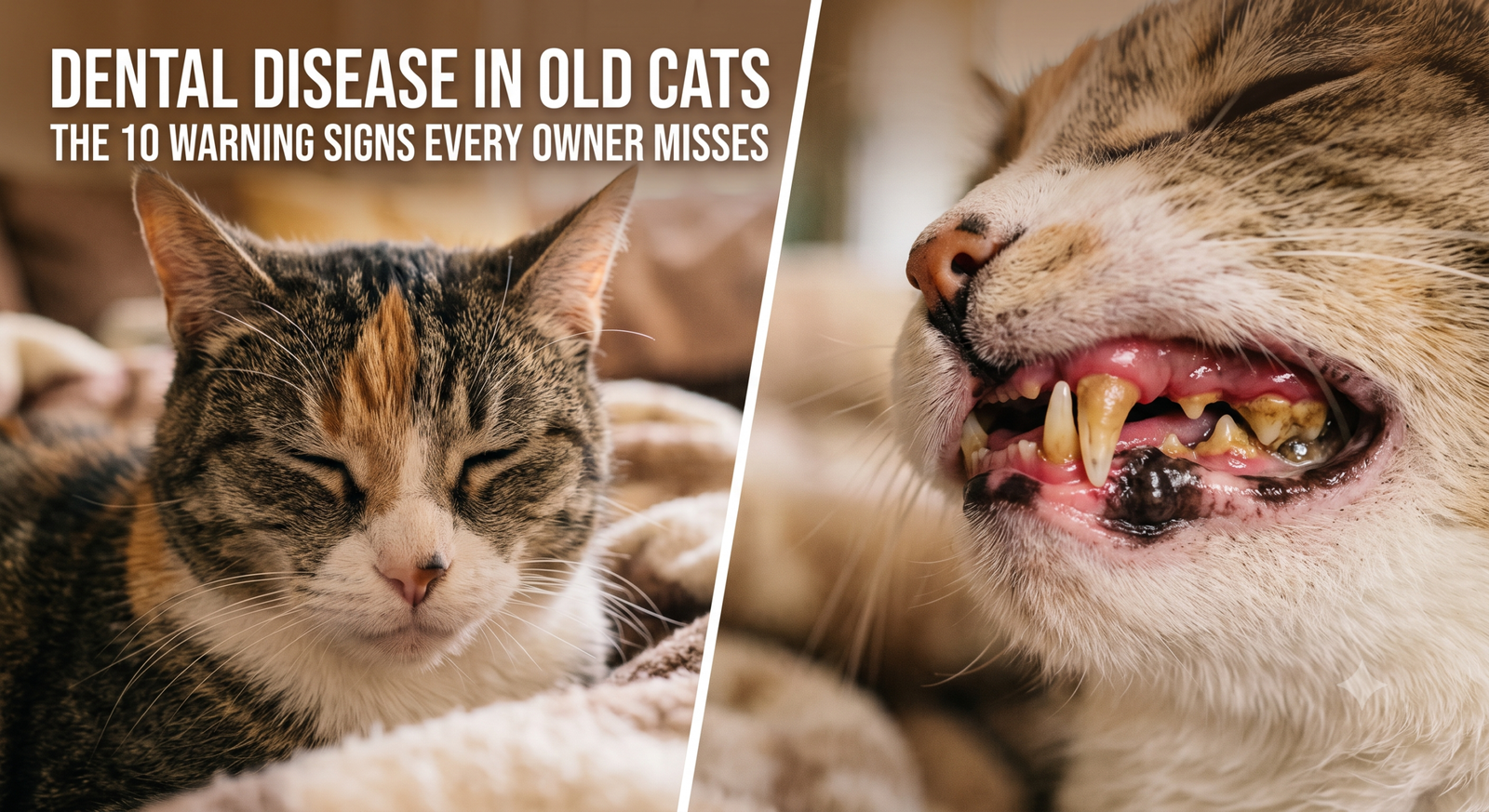
The signs of dental disease in old cats include bad breath, red or swollen gums, drooling, difficulty eating, pawing at the mouth, weight loss, and behavior changes. Many cats hide dental pain, so subtle signs matter. Dental disease affects most cats over 4, and the majority of senior cats, so any of these signs warrants a vet dental exam.
🦷 Senior Cat Dental Care
✔ Vet-Reviewed Facts
By Richard M. Carter · 13 min read · Updated July 2026
Cats are masters at hiding pain. It is written into their DNA, a survival instinct from their wild ancestors who could not afford to look weak. Nowhere is this more true than with their teeth.
Your old cat could have painful dental disease right now and still be eating, purring, and acting almost normal. That is exactly why dental problems in senior cats are so often missed until they are severe. This guide walks you through the real signs of dental disease in old cats, including the subtle ones most owners overlook, so you can catch trouble early and spare your cat unnecessary suffering.
⚕️
Why this matters so much. Dental disease is not just about bad breath. In cats it can be genuinely painful, and it is linked to problems in the kidneys, liver, and heart when bacteria enter the bloodstream. Because cats hide it so well, the signs in this guide are often the only clue you will get. If you spot even one, book a veterinary dental exam. Only a vet can properly diagnose and treat what is happening in your cat’s mouth.
🐱
The Essentials at a Glance
1
Dental disease is extremely common in old cats. The majority of cats over the age of four have some form of it, and the numbers climb steeply with age.
2
Cats hide dental pain almost completely. Most cats show no obvious symptoms even when disease is severe, so subtle behavior changes matter enormously.
3
Bad breath is the most common early sign. Persistent unpleasant breath is not normal in cats. It is usually the first detectable clue of dental disease.
4
Tooth resorption is a hidden epidemic. This painful condition affects a large share of senior cats and is often invisible without dental X-rays.
5
Early treatment can reverse it. Gingivitis, the first stage, is reversible. Left alone it becomes irreversible periodontal disease, so catching signs early truly matters.
Why Old Cats Are So Prone to Dental Disease
Age, hidden pain, and years of plaque buildup combine to make dental disease one of the most common health problems in senior cats.
Dental disease is an umbrella term covering several conditions that affect the teeth, gums, and the structures that hold teeth in place. In cats, the most common forms are gingivitis, periodontal disease, and tooth resorption. Each becomes more likely as a cat ages.
The core problem starts with plaque, a film of bacteria that constantly forms on the teeth. When it is not removed, it hardens into tartar and creeps below the gumline. There, it triggers the immune system to attack, which inflames the gums and, over time, destroys the tissue and bone anchoring the teeth. Years of this process is why senior cats carry so much more dental disease than young ones.
What makes it worse in cats specifically is their instinct to hide pain. A cat with a genuinely painful mouth will often keep eating and behaving almost normally, because showing weakness is dangerous in the wild. By the time obvious signs appear, the disease is frequently advanced. This is the single most important thing to understand: absence of obvious symptoms does not mean absence of disease.
50-90%of cats over age 4 have some dental disease
70%+of senior cats affected by tooth resorption
Mostcats show no obvious symptoms even when severe
12 momaximum between dental checks for senior cats
The 10 Signs of Dental Disease: Flip Through Them
Use the arrows below to move through each warning sign. For every one, you will see what it looks like and what it usually means. Even a single sign is worth a vet visit.
🦷 Warning Sign1 of 10
👃
Bad Breath (Halitosis)
This is the most common and most overlooked early sign. Many owners assume “cat breath” is normal, but genuinely foul, persistent breath is not. It is caused by the bacteria of dental disease multiplying in the mouth.
What it means
A strong, unpleasant, or rotten smell usually signals active bacterial infection in the gums or a decaying tooth. The worse and more persistent the odor, the more likely the disease is advanced.
Owner tip: Take a gentle sniff near your cat’s mouth once a week. A sudden change in breath smell is one of the earliest clues you will get.
🦷 Warning Sign2 of 10
🔴
Red or Swollen Gums
Healthy cat gums are a coral pink. With gingivitis, the earliest stage of dental disease, the gums change color to red or even purple, and the edge along the teeth swells and puffs up.
What it means
Redness and swelling are the immune system reacting to plaque bacteria under the gumline. At the gingivitis stage this is still reversible with veterinary cleaning, which is why spotting it early matters so much.
Where to look: The red line often shows first right where the gum meets the tooth, especially on the back teeth.
🦷 Warning Sign3 of 10
🩸
Bleeding Gums
Gums affected by dental disease become fragile and bleed easily, sometimes on contact with food or a toy, sometimes spontaneously. You might notice a pinkish tinge on chew toys, in the water bowl, or on bedding where your cat rests their head.
What it means
Bleeding indicates inflamed, diseased gum tissue. It is a clear sign the disease has moved beyond the very earliest stage and the mouth needs professional attention.
Look closely: Blood spots can be subtle. Check for faint pink smears on favorite blankets or near where your cat eats.
🦷 Warning Sign4 of 10
💧
Drooling (Sometimes Bloody)
Cats do not usually drool. When a senior cat starts producing excess saliva, dribbling, or leaving damp patches where they rest, the mouth is very often the reason. The drool may occasionally be tinged with blood.
What it means
Excess drooling is a strong indicator of oral pain or inflammation, common with tooth resorption and stomatitis. The pain makes swallowing saliva uncomfortable, so it escapes instead.
Notice the pattern: Drooling that appears mainly around mealtimes points strongly toward a painful dental cause.
🦷 Warning Sign5 of 10
🍽️
Difficulty Eating or Chewing
Watch how your cat eats. Signs of trouble include chewing on only one side of the mouth, dropping food (called quidding), approaching the bowl eagerly then backing away, or preferring wet food after a lifetime of enjoying kibble.
What it means
These are attempts to avoid pain. A cat with sore teeth learns to chew where it hurts least, or gives up on hard food that aggravates the pain. It is one of the clearest functional signs.
Diet shift clue: A cat that suddenly refuses dry food they used to love is very often telling you their teeth hurt.
🦷 Warning Sign6 of 10
🐾
Pawing at the Mouth or Face
A cat that repeatedly paws or rubs at its mouth, face, or cheeks is trying to relieve discomfort it cannot reach. You might also see head shaking or the cat rubbing its face against furniture more than usual.
What it means
This is a direct behavioral signal of oral discomfort. The cat feels something wrong in its mouth and is instinctively trying to address it, even though it cannot.
Easy to miss: Owners often dismiss face-rubbing as grooming or affection. If it becomes frequent or focused on one side, take note.
🦷 Warning Sign7 of 10
🧶
A Neglected, Unkempt Coat
Cats groom themselves using their mouth. When grooming becomes painful, they do it less, and their coat suffers. A previously sleek senior cat may develop a dull, matted, or greasy coat.
What it means
A decline in grooming is an indirect but telling sign. If the mouth hurts, the tongue and teeth that do the grooming hurt too, so the cat avoids it. This is one of the subtle signs that is easy to attribute to old age instead.
Connect the dots: A scruffy coat plus any mouth sign together strongly point toward dental pain.
🦷 Warning Sign8 of 10
⚖️
Weight Loss
When eating becomes painful enough, cats eat less, and weight loss follows. Because it happens slowly and the cat may still visit the bowl, owners often miss it until it is significant.
What it means
Ongoing dental pain can quietly reduce how much a cat eats, leading to gradual weight and muscle loss. In senior cats this is serious, because they have less reserve to spare.
Do not assume it is just aging. Weight loss in an old cat always deserves a vet visit, and dental pain is one common, treatable cause.
🦷 Warning Sign9 of 10
😾
Irritability and Behavior Changes
Chronic pain changes personality. A once-affectionate cat may become withdrawn, hide more, resist being touched near the head, or grow unusually grumpy and short-tempered.
What it means
Constant low-grade mouth pain wears a cat down, just as a toothache would wear you down. Behavior change is often the only sign a stoic cat gives, and it is frequently misread as the cat simply “getting old and cranky.”
Trust the change: A clear shift in your cat’s normal temperament is meaningful. Cats rarely change personality without a reason.
🦷 Warning Sign10 of 10
🦷
Visible Tooth Damage or Tartar
If you can safely look, you may see the physical evidence directly: brown or yellow tartar crusted along the teeth, a tooth that looks broken or discolored, a red spot at the gumline where a tooth is being resorbed, or gaps where teeth have fallen out.
What it means
Visible tartar signals established disease. A missing, broken, or discolored tooth, or a red lesion where tooth meets gum, points to advanced periodontal disease or tooth resorption that needs treatment, often extraction.
Safety first: Never force your cat’s mouth open. If they resist, leave it to the vet. A painful mouth makes even gentle cats bite.
🦷
Related Dental Care Guide on Elder Pet HealthAfter a Tooth Extraction: What to Feed Your Pet During Dental Recovery
→
The Main Types of Dental Disease in Senior Cats
The signs above can stem from several different conditions. Understanding them helps you know what your vet is looking for.
Not all feline dental disease is the same. When your vet examines your senior cat, they are trying to work out which of these is at play, because the treatment differs for each.
Gingivitis
This is the earliest stage and the only fully reversible one. Plaque bacteria inflame the gums, turning them red and swollen and making them bleed easily. Caught here, a professional cleaning can return the mouth to health. This is the stage you want to catch, which is the whole point of watching for early signs.
Periodontal Disease (Periodontitis)
If gingivitis is left untreated, it advances to periodontitis, the most common serious dental condition in senior cats. The infection spreads below the gumline and destroys the ligaments and bone that hold teeth in place. Gums recede, roots become exposed, teeth loosen, and pus may appear. This stage is irreversible, and badly affected teeth usually need extraction.
Tooth Resorption
This is a hidden epidemic in older cats, affecting a large majority of senior cats. The cat’s own body begins breaking down and absorbing the structure of a tooth, often starting below the gumline where you cannot see it. It is intensely painful and frequently invisible without dental X-rays, which is why professional exams matter so much.
Stomatitis (Feline Chronic Gingivostomatitis)
This is severe, widespread inflammation of the mouth tissues, thought to be an overreaction of the cat’s immune system to plaque. It is extremely painful and can dramatically reduce quality of life. It often requires a combination of dental surgery, medication, and sometimes extraction of many teeth. It is sometimes linked to viral infections like FIV and FeLV.
🔬
Why X-rays are essential. A visual exam alone cannot reveal what is happening below the gumline, where tooth resorption and bone loss hide. This is why proper feline dental assessment requires dental X-rays under anesthesia or sedation. Your cat could look fine on the surface while a tooth is being painfully resorbed underneath.
🩺
Related Guide on Elder Pet HealthBlood Work for Senior Pets: What Every Test Checks Before Anesthesia
→
What to Do If You Spot the Signs
Noticing a sign is the important part. Here is how to act on it calmly and effectively.
If you have recognized one or more of these signs in your senior cat, the path forward is straightforward. The goal is to get a professional assessment before the disease advances further.
- Book a veterinary dental exam. Describe exactly which signs you have seen and when they started. Your vet will examine the mouth and very likely recommend a cleaning with dental X-rays under anesthesia to see the full picture.
- Do not attempt home treatment of active disease. There is no home remedy that reverses established dental disease. Anesthesia-free cleanings offered by non-vets only address what is visible and leave the real problem, plaque below the gumline, untouched.
- Ask about pain. Because cats hide it, specifically ask your vet whether your cat is likely in pain and what can be done. The answer is often yes, and treatment brings visible relief.
- Discuss prevention going forward. Once the mouth is healthy again, daily tooth brushing with cat-safe products, dental diets, and regular checks keep problems from returning.
💡
The prevention gold standard. Daily tooth brushing with a cat-specific toothpaste is the single most effective home step, though it must be introduced gently and never with human toothpaste, which is toxic to cats. Combined with a yearly dental check, it is the best defense against dental disease returning.
Keeping Your Senior Cat’s Mouth Healthy
Once dental disease is treated, prevention keeps it from coming back. None of these replace veterinary care, but together they dramatically slow plaque buildup.
Daily brushing is the most powerful tool, using a soft cat toothbrush or finger brush and toothpaste made for cats. Introduced slowly and patiently, many cats accept it over a few weeks. Beyond brushing, veterinary dental diets and treats designed to reduce plaque can help, as can dental water additives, though these are supporting players rather than substitutes for brushing.
The most important ongoing habit is regular veterinary dental checks. Senior cats should have their teeth examined at least once every twelve months, and cats with a history of dental problems every three to six months. Because cats hide disease so well, these professional checks catch what you cannot see at home. Prevention plus early detection is how you keep an old cat’s mouth comfortable for the rest of their life.
🐱
Related Guide on Elder Pet HealthSenior Cat Yowling at Night: 8 Causes Including Hidden Pain
→
Frequently Asked Questions
What are the first signs of dental disease in old cats?▼
The earliest and most common sign is persistent bad breath, followed by red or swollen gums along the gumline. Because cats hide pain, these subtle signs often appear before any obvious eating difficulty. Other early clues include a slight change in eating habits, mild drooling, or reduced grooming. Any of these in a senior cat warrants a veterinary dental exam, since early-stage gingivitis is still reversible.
Do cats hide dental pain?▼
Yes, remarkably well. Cats instinctively hide pain and weakness, an inherited survival trait, so most cats show no obvious symptoms even when dental disease is severe. A cat with a genuinely painful mouth will often keep eating and behaving almost normally. This is exactly why subtle signs like reduced grooming, behavior changes, or a shift to softer food matter so much, and why regular vet dental checks are essential.
Is bad breath in cats a sign of dental disease?▼
Usually, yes. Genuinely foul or persistent bad breath is not normal for cats and is the most common early sign of dental disease. It is caused by bacteria from plaque and infection building up in the mouth. Occasionally strong breath can point to other issues such as kidney disease, so a vet visit is the right step to identify the cause. Do not dismiss ongoing bad breath as just normal cat breath.
Can old cats have their teeth cleaned under anesthesia safely?▼
Yes. While any anesthesia carries some risk, modern veterinary protocols make dental procedures safe for the great majority of senior cats. Vets run pre-anesthetic blood work to check organ function and tailor the anesthesia accordingly. The pain and infection of untreated dental disease usually pose a far greater risk to an old cat’s health than a properly managed anesthetic. Anesthesia-free cleaning is not an effective alternative, as it cannot treat disease below the gumline.
How often should a senior cat have a dental check?▼
At least once every twelve months for a healthy senior cat, and every three to six months for cats with a history of dental problems, depending on their condition. Because cats hide dental disease so effectively, these professional checks are often the only way to catch problems like tooth resorption early, since it frequently hides below the gumline and requires dental X-rays to detect. Regular checks combined with home brushing are the best defense.
The Bottom Line
Dental disease is one of the most common and most missed health problems in senior cats, precisely because cats are so good at hiding the pain it causes. The signs are there if you know what to look for.
Bad breath, red gums, drooling, changes in eating, pawing at the face, a scruffy coat, weight loss, irritability, and visible tartar or tooth damage are all your cat’s way of telling you something is wrong in their mouth. Even one of these deserves attention.
The good news is that caught early, dental disease is very treatable, and in its first stage even reversible. If you have spotted any sign in this guide, book a veterinary dental exam. Your old cat cannot tell you their teeth hurt, but you can notice, and act, on their behalf. That is one of the kindest things you can do for them. 🐾